The Resilience Revolution in Skin Longevity
Over the past few years, longevity has become one of the most influential forces shaping beauty, wellness, and healthcare. Once associated largely with lifespan extension and biohacking, it has found a natural home in skincare, where interest is growing around prevention, cellular health, and healthy aging.
Consumers are placing greater value on maintaining quality of life as they age, and that perspective is changing what they expect from skincare. Beyond appearance alone, there is growing interest in supporting the biological functions that help skin remain healthy over time.
Alongside longevity, another idea is beginning to take center stage: resilience.
A Shift in Perception
In a global survey of more than 1,000 consumers across seven countries, participants were asked a simple question: At what age does someone become old? The average response was 62.1 years old, but perceptions varied dramatically between markets. The difference between Brazil and Nigeria alone was nearly 18 years, highlighting the powerful influence of culture, lifestyle, and social expectations on how we define aging. Increasingly, consumers are viewing aging through the lens of how they feel rather than how many birthdays they have celebrated. Energy, recovery, adaptability, and vitality are becoming more meaningful measures of healthy aging than chronological age alone.
Understanding the Biology of Longevity
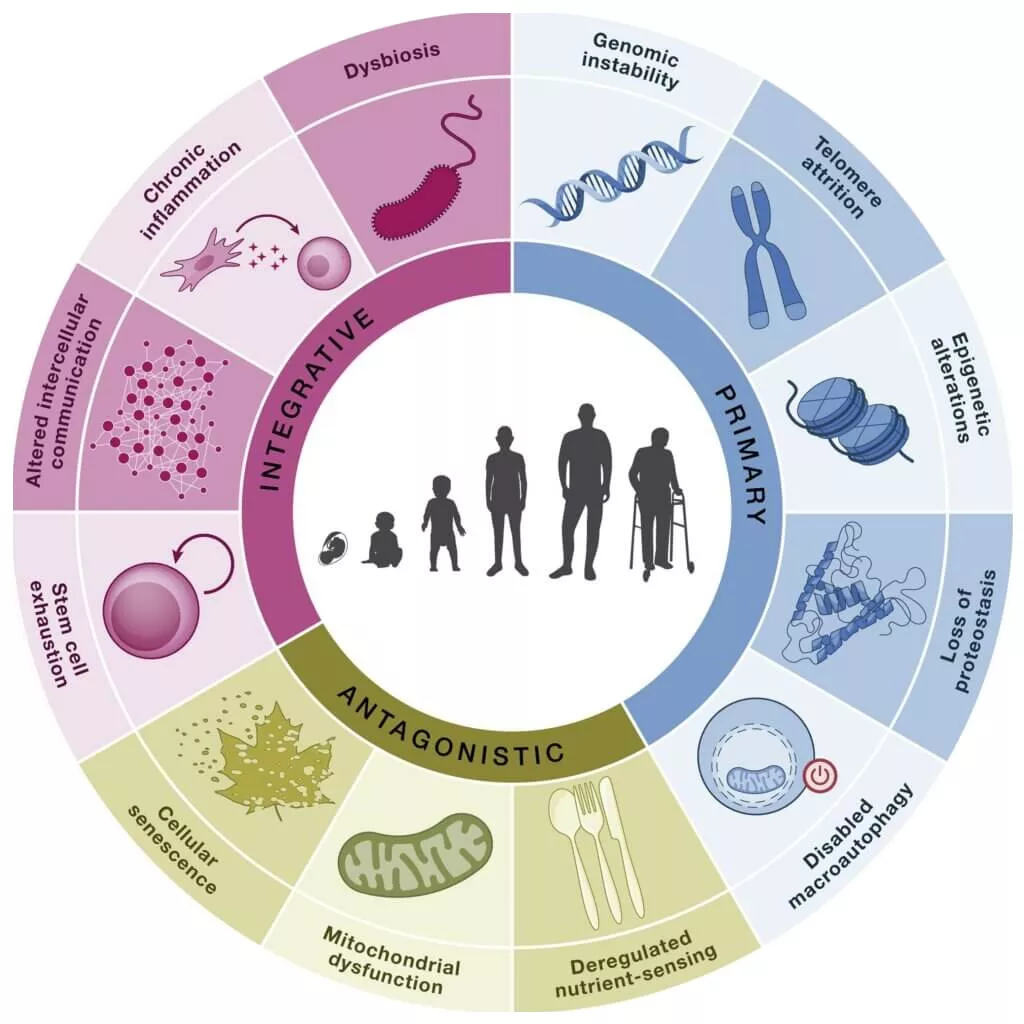
While aging may be experienced personally, it is driven by biological processes shared by all of us. In 2023, researchers expanded the Hallmarks of Skin Aging framework to describe the major mechanisms that contribute to age-related decline, including (but not limited to) genomic instability, mitochondrial dysfunction, chronic inflammation, altered cellular communication, telomere attrition, stem cell exhaustion, and loss of proteostasis. Together, these hallmarks help explain why tissues gradually become less capable of repairing damage, adapting to stress, and maintaining optimal function. Many of today's most interesting beauty innovations are rooted in these pathways, reflecting a growing understanding that long-term skin health depends on supporting the biological systems that help skin remain resilient over time.
Four Approaches to Supporting Skin Longevity
At Gattefossé, we've identified four complementary strategies to approach skin longevity: Adaptability, Energy, Vitality, and Recovery.
1. Adaptability: Silkaress®
The hallmarks of altered intercellular communication and loss of proteostasis are both linked to a declining ability to adapt to stress. As signaling becomes disrupted and protein quality deteriorates, skin becomes less capable of maintaining homeostasis.
Silkaress® directly addresses this challenge.
Inspired by the relationship between the silkworm and the white mulberry leaf, Silkaress® was developed to help skin respond to environmental and climatic stressors. Recent research demonstrated its ability to modulate epidermal phosphorylation pathways involved in differentiation, barrier integrity, and tissue adaptation. Through its impact on epidermal signaling and barrier function, Silkaress® supports the skin's ability to adjust to changing conditions while maintaining comfort and softness.
2. Energy: EnergiNius®
Energy powers every biological process within the skin. One of the key hallmarks behind this is mitochondrial dysfunction. As mitochondrial activity declines over time, cells have fewer resources available for repair, regeneration, and adaptation. This reduction in cellular energy is closely linked to many visible signs of aging.
EnergiNius® was developed to support cellular vitality by helping protect skin exposed to digital stress. Our research has shown that EnergiNius® helps preserve the mitochondrial network.
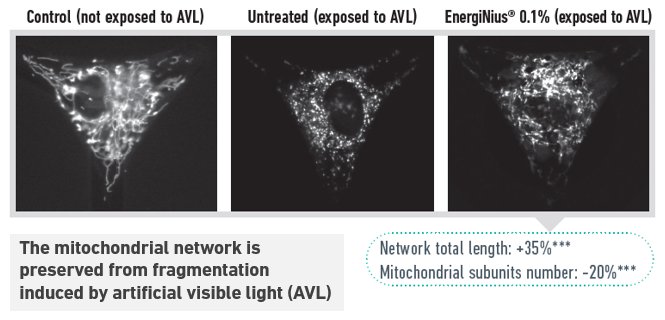
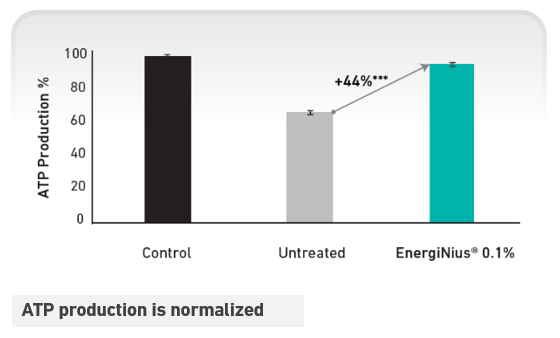
And by limiting mitochondrial network fragmentation, ATP production is normalized supporting the energy needed to sustain healthy skin metabolism.
3. Vitality: Solastemis®
Vitality depends on maintaining the skin's regenerative potential.
Genomic instability, telomere attrition, and stem cell exhaustion progressively reduce the skin’s capacity for efficient renewal. Protecting the biological systems that preserve this regenerative potential has therefore become an important strategy for skin longevity.
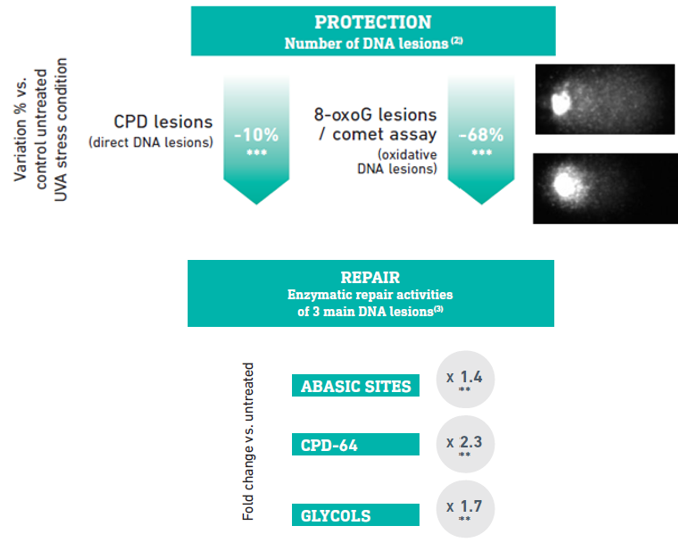
Solastemis® helps address these challenges through two complementary actions. Our research demonstrates its ability to protect DNA against UVA-induced lesions including 8-oxo-G and CPD, while supporting the skin’s endogenous DNA repair pathways for three additional types of DNA lesions.
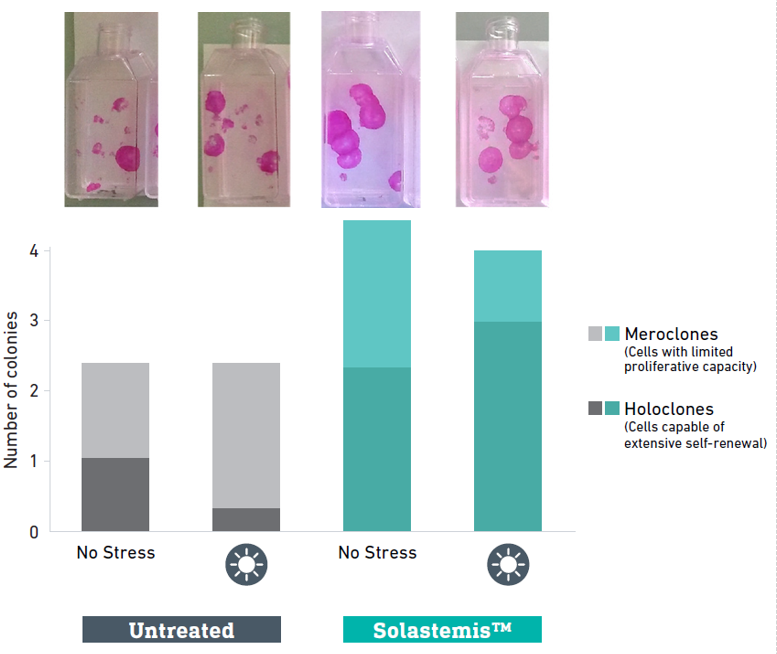
Further studies show that Solastemis® helps preserve keratinocyte clonogenic potential, a key indicator of cellular self-renewal capacity.
Together, these actions help protect the biological foundations of skin regeneration, supporting a comprehensive longevity strategy.
4. Recovery: Noxifense™
Healthy skin is constantly exposed to environmental stressors, but the ability to recover from that stress is just as important as the ability to withstand it. Chronic inflammation can accelerate biological aging when the skin’s inflammatory response remains persistently activated.
Noxifense™ targets this oxi-inflammatory cycle through two key mechanisms: limiting NF-κB activation and strengthening endogenous antioxidant defenses. As shown below, Noxifense™ reduces NF-κB translocation under inflammatory conditions while increasing the expression of antioxidant enzymes, helping reduce intracellular ROS and restore cellular balance.
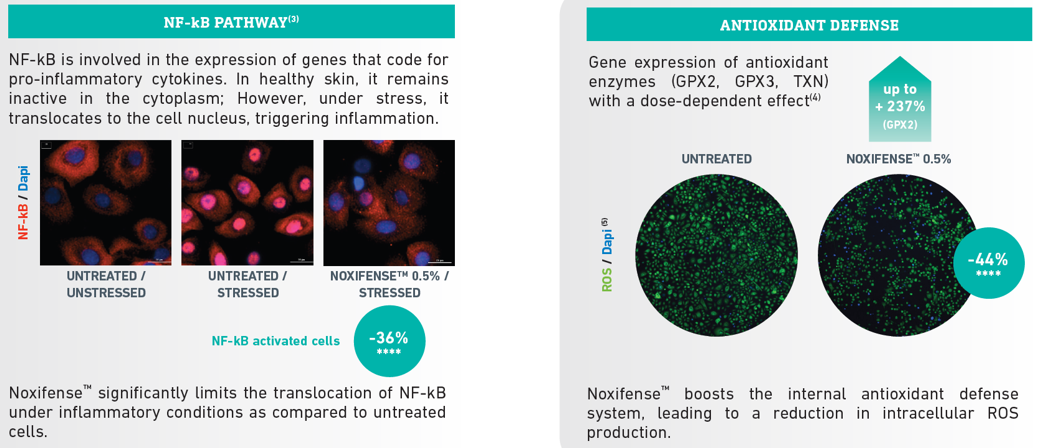
By helping break the oxi-inflammatory stress loop and restore cellular balance, Noxifense™ supports the skin’s capacity for recovery, an essential component of long-term skin resilience and longevity.