
Oral peptide delivery with lipid-based excipients
Oral delivery remains the most patient friendly route of administration. Yet for peptides, it has long been considered an almost unreachable goal. Enzymatic degradation, low permeability and poor bioavailability have historically limited peptide drugs to injectable formulations.
Today, this paradigm is shifting. Thanks to advances in peptide design and formulation science, lipid based excipients are emerging as powerful enablers of oral peptide delivery. In this article, we explore why lipids and peptides are compatible, how lipid based formulations can address key peptide oral delivery challenges, and how Gattefossé supports formulators in this rapidly evolving field.
Lipids and peptides: let’s end the myth
Peptides are often perceived as incompatible with lipid‑based formulations because they are typically hydrophilic, large molecules with limited membrane permeability. While this is true for many peptides, it is far from the full picture.
A peptide does not need to be lipophilic to benefit from lipid‑based excipients. Two well‑known oral peptide medicines illustrate this clearly:
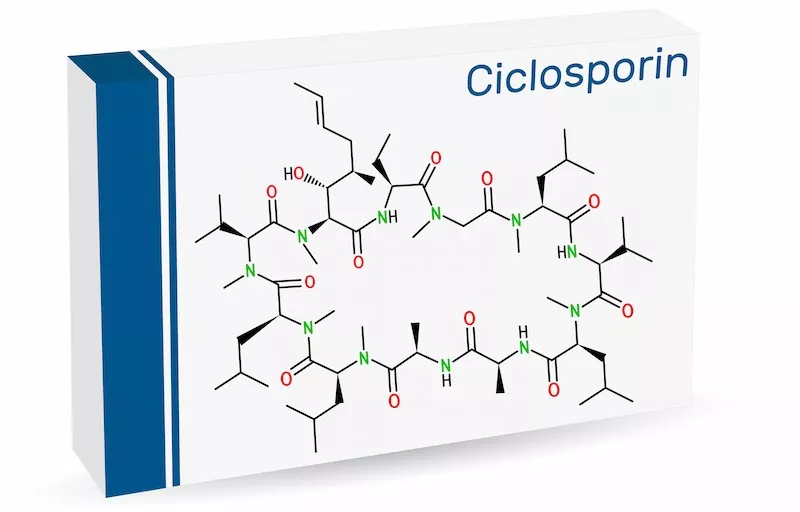
- Ciclosporin (princeps: Neoral®), a lipophilic peptide formulated as an oral solution mainly composed of corn oil-mono-di-triglycerides (Maisine® CC);
- Octreotide acetate (Mycapssa®), a hydrophilic peptide successfully formulated using glyceryl monocaprylate and glyceryl tricaprylate along with a permeation enhancer.
These examples demonstrate that lipid‑based excipients can be used across a broad spectrum of peptide profiles, provided the formulation strategy is well adapted.
Why is oral peptide delivery so challenging?
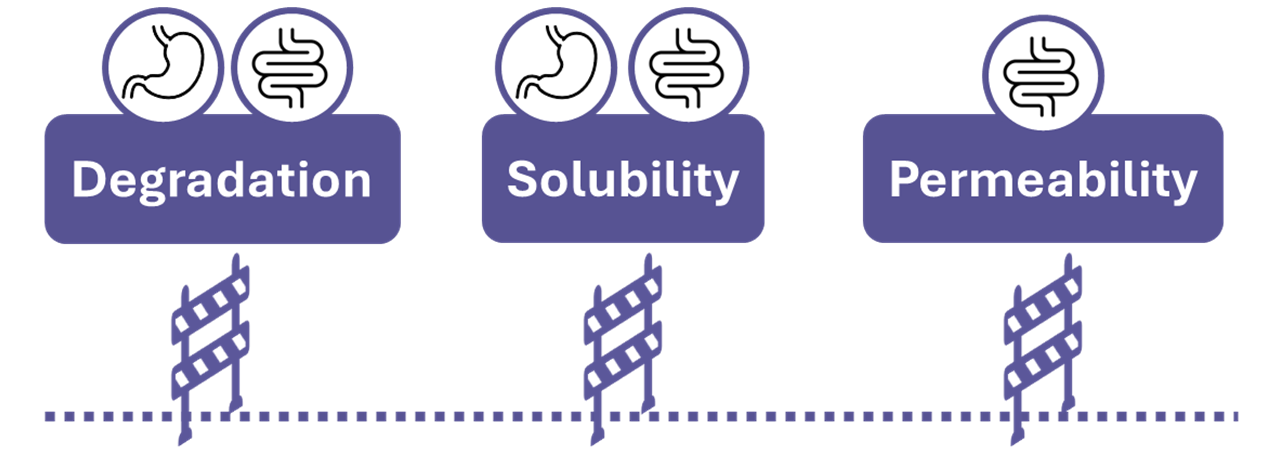
Despite their therapeutic potential, peptides face three major barriers when administered orally:
1. Degradation in the gastrointestinal environment: stomach acidic pH and proteolytic enzymes found in both stomach and duodenum can alter peptide structure.
2. Solubility: peptide solubility is strongly influenced by pH, ionic strength and molecular structure. A peptide may be soluble in gastric conditions but poorly soluble in the intestine—or vice versa—making absorption unpredictable.
3. Permeability: most peptides exhibit very low intestinal permeability because of their large size and hydrophilicity, which limit passive diffusion through the intestinal epithelium.
Overcoming these three hurdles is the key to successful oral peptide delivery.
Increase peptide solubility through formulation
For hydrophilic peptides, a lipidization or hydrophobization step by ion pairing is often required to increase logP and facilitate incorporation into lipid systems.
Lipid‑based formulations (LBF) offer versatile solutions depending on peptide properties:
LBF type I/II: for lipophilic peptides, which will be solubilized in oils and co‑surfactants;
- LBF type III/IV (SEDDS, SMEDDS, SNEDDS): for hydrophilic peptides, which will be suspended or dispersed with surfactants.
SLN and NLC: innovative nanocarriers offering protection and solubilization, but this technology still lacks industrial scale-up possibilities. Read our latest whitepaper on the topic
Enhancing intestinal permeability: the role of lipids
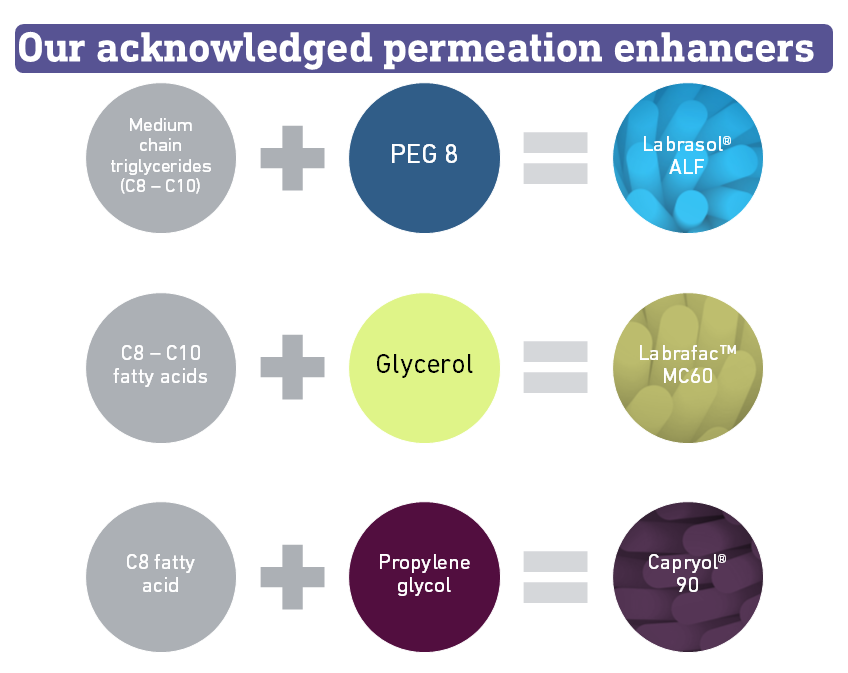
For peptides, absorption often relies on the paracellular pathway, which is tightly regulated by intestinal tight junctions. Medium‑chain fatty acid esters (C8–C10) are known to transiently open tight junctions, while preserving epithelial integrity. Read about the basics of intestinal permeation
A comprehensive excipient portfolio along with an expert technical support
Gattefossé offers a broad portfolio of lipid‑based excipients suitable for oral peptide delivery, that act both on solubility and permeability. Our excipients are supported by a comprehensive regulatory package, strong precedence of use and extensive technical documentation. Contact us today to enhance your formulation journey!
Excipients for solubility and bioavailability enhancement
Poor solubility, poor permeability, and pre-systemic elimination are factors that can limit absorption of some drugs. Lipid excipients have the capability to overcome these hurdles and enhance oral bioavailability through different mechanisms.
A toolbox for oral peptide delivery
Oral delivery of peptides encounters many hurdles, as they are subject to degradation in the gastro-intestinal tract, leading to poor oral bioavailability. Different strategies have been developed: the objective of this webinar is to give formulators clues on how to use lipid excipients for enhanced oral peptide delivery.

Labrasol® ALF
- Bioenhancer
- Permeation enhancer
- Self emulsifying drug delivery system
- Solubilizer
